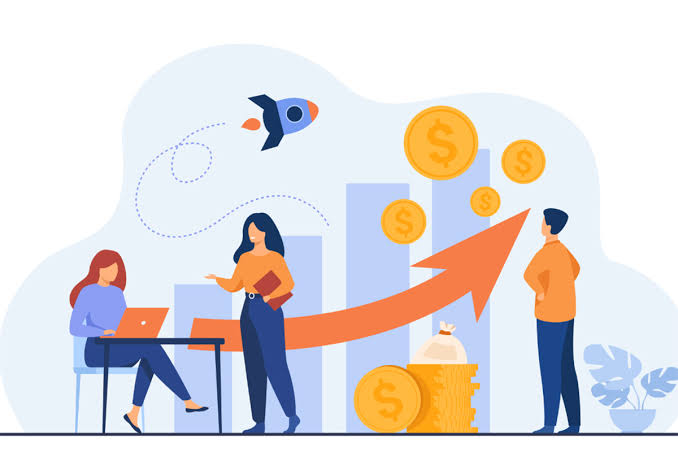
Marketing Creates Opportunities. A Structured Sales Process Converts Them into
Revenue.
Core Message for the Team
Marketing does not generate revenue. Sales generates revenue.
Marketing brings enquiries. Sales converts enquiries into paying customers.
One of the biggest mistakes businesses make is believing that increasing enquiries
automatically
increases revenue.
It doesn't.
If 100 people enquire and only 15 book, the problem is not marketing anymore—it's the sales
process.
Think of it this way:
Marketing opens the
door.
Sales welcomes the guest
inside
Service ensures they
return.
All three must work together.
Why Step 4 is Important
Imagine you spend ₹50,000 on digital marketing.
The campaign generates:
120 enquiries
40 phone calls
80 WhatsApp messages
Sounds successful.
But after one month:
Only 12 bookings are confirmed.
What happened?
Usually the problem is:
Slow response
No follow-up
Poor sales communication
Wrong pricing
No CRM
No understanding of
customer needs
Lost enquiries
The opportunity was created.
The conversion never happened.
Simple Example
Imagine a retail clothing store.
Every day 200 people enter the showroom.
But only 20 people buy.
Would you immediately spend more money on advertising?
Probably not.
You would first ask:
Are customers being
greeted properly?
Is the sales staff
understanding customer needs?
Are products being
presented well?
Are objections being
handled?
Is billing taking too
long?
Hotels work exactly the same way.
Every enquiry is like a customer walking into your showroom.
The Sales Funnel
Every enquiry passes through stages.
Marketing
Awareness
Enquiry
Qualification
Proposal / Quote
Follow-up
Booking
Arrival
Guest Experience
Repeat Business
Referral
What We Do in Step 4
1. Capture Every Enquiry
The first objective is simple:
Never lose an enquiry
Enquiries may come from:
Website
WhatsApp
Phone
Email
Google Business
Profile
Facebook
Instagram
OTAs
Travel agents
Corporate clients
Every enquiry should be recorded and tracked.
2. Respond Quickly
Speed matters.
Imagine enquiring at two hotels.
Hotel A replies after 8 hours.
Hotel B replies within 5 minutes.
Who is more likely to get the booking?
Usually Hotel B.
Research consistently shows that faster responses improve conversion rates because
the customer is
still actively looking and comparing options.
3. Understand Customer Needs
Selling starts with listening.
Instead of immediately quoting a price, ask questions like:
What brings you to
the city?
Business or
leisure?
Number of guests?
Check-in and
check-out dates?
Budget
expectations?
Special
requirements?
Only then recommend the best option.
People appreciate solutions, not just prices.
4. Present Value, Not Just Price
Many sales teams sell rooms.
Great sales teams sell experiences
Instead of saying:
Deluxe Room ₹3,000
Say:
"This room includes breakfast, high-speed Wi-Fi, complimentary mineral water, a work
desk, and is ideal
for business travellers. It's just five minutes from the metro station."
The customer now understands the value, not just the cost.
5. Follow Up Consistently
Many bookings are lost because nobody follows up.
Example:
Customer:
"I'll discuss it with my family."
Poor sales process:
No follow-up
Professional sales process:
"Thank you for considering us. Just checking if we can help you with any questions.
We'd be happy to
assist you in planning your stay."
A polite follow-up often brings customers back.
6. Build Corporate and B2B Relationships
Not every sale comes from online marketing.
Revenue also comes from long-term partnerships with:
Corporate
companies
Travel agents
Educational
institutions
Hospitals
Event planners
Wedding planners
Government
departments
One corporate client may generate bookings throughout the year, making
relationship-building a
valuable part of the sales strategy.
7. Increase Revenue Per Booking
Revenue growth isn't only about selling more rooms.
It's also about increasing the value of each booking.
Examples:
Instead of selling only a room:
Offer:
Breakfast
Airport
transfer
Early check-in
Late check-out
Dinner packages
Sightseeing
Conference
facilities
Event packages
This increases the average revenue from each guest.
8. Track Sales Performance
Sales should be measured, not guessed.
Useful KPIs include:
A video of a riverside breakfast can become:
Number of
enquiries
Response time
Conversion
rate
Booking value
Average Daily Rate
(ADR)
Occupancy %
Revenue Per
Available Room (RevPAR)
Repeat guest
percentage
Corporate account
growth
These numbers help identify what's working and where improvements are needed.
Example: The Same Marketing, Different Results
Two hotels receive 100 enquiries in a month.
Hotel A
Replies after 12
hours.
Sends only a room
rate.
Rarely follows up
Result: 15 bookings.
Hotel B
Replies within 10
minutes
Understands guest
needs.
Explains the value
of the stay.
Follows up
politely
Offers breakfast
and airport pickup
Result: 35 bookings.
The marketing effort was the same.
The difference was the sales process.
Outcome of Step 4
By the end of this stage, the hotel should have:
We monitor key metrics such as:
A structured
enquiry management system
Fast and
professional response processes
A trained team
that sells value, not just price
Consistent
follow-up for every enquiry.
Strong
relationships with corporate and B2B partners.
Opportunities to
increase revenue per booking through upselling and cross-selling.
A sales dashboard
with measurable KPIs to track performance and improve results.
A Simple Analogy for the Team
Imagine filling a bucket with water.
Marketing is the tap that fills the bucket with enquiries.
Sales is the bucket itself. If it has holes—slow responses, poor communication,
weak follow-up, or
missed opportunities—most of the water leaks out before it can be used.
Instead of opening the tap further (spending more on marketing), the smarter
approach is to fix the
holes. A strong sales process ensures that every enquiry has the best possible
chance of becoming
revenue.
One-Line Summary
Step 4 is where opportunities become income. We build a disciplined sales system
that captures every
enquiry, responds quickly, communicates value, follows up consistently, and
maximizes revenue from
every customer interaction.
Back