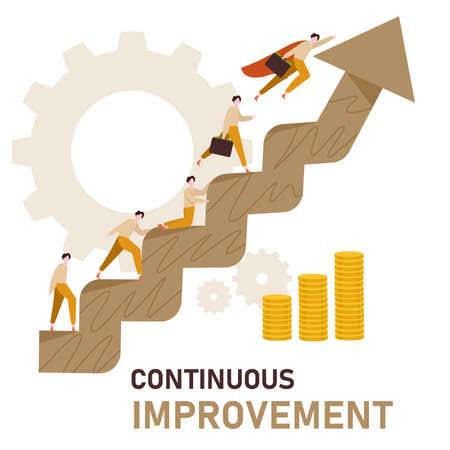
Growth Requires Consistent Operational Support Beyond Marketing
Core Message for the Team
Marketing may bring the first guest, but operations determine whether the guest returns,
recommends
the hotel, and leaves a positive review.
Many hotel owners believe that once marketing is working, the business will continue to grow
automatically.
In reality, growth is a continuous process
Markets change.
Customer expectations
change.
Competitors improve.
Technology evolves.
If a business stops improving, it eventually starts falling behind.
This is why Epacesetters doesn't stop at marketing—we become a long-term growth partner.
Understanding the Growth Cycle
Think of growing a plant.
You don't water it once and expect it to flourish forever.
You need to:
Water it regularly.
Add nutrients.
Remove weeds.
Protect it from pests
Trim unhealthy
branches.
Monitor its growth.
A hotel business is no different.
Marketing is only one part of keeping the business healthy.
Why Continuous Improvement Matters
Imagine a hotel that receives excellent marketing support.
Occupancy increases from 45% to 75%
But :
Housekeeping quality
declines.
Guests wait too long
during check-in.
Online reviews begin
mentioning poor service.
Rooms are not maintained.
Staff are not trained.
Within a few months:
Ratings drop.
OTA rankings fall.
Marketing costs increase
because trust has decreased.
The marketing wasn't the problem.
The operations couldn't support the growth.
Our Role
We work as an extended business partner.
Instead of asking:
"How many bookings did we get?"
We ask:
"How can we make the business stronger every month?"
Action Steps for Step 5
1. Conduct Monthly Business Reviews
Every month, review the business using real data
Discuss:
Occupancy
ADR (Average Daily Rate)
RevPAR (Revenue Per
Available Room)
Direct bookings
OTA performance
Direct bookings
Guest reviews
Revenue by market
segment
Campaign performance
Direct bookings
Expenses and
profitability
Purpose: Make decisions based on facts, not assumptions.
2. Monitor Guest Feedback
Every review is free consulting
Instead of only replying to reviews, identify recurring issues.
For example:
If guests repeatedly mention:
Slow Wi-Fi
Poor breakfast
Unfriendly staff
Delayed housekeeping
These become operational priorities.
Action
Create an improvement plan and assign responsibility to the relevant department.
3. Conduct Regular Property Audits
Visit the hotel regularly and review the guest experience.
Exterior appearance
Lobby
Rooms
Bathrooms
Linen
Amenities
Restaurant
Signage
Staff grooming
Safety standards
Purpose: See the hotel through the eyes of a guest.
4. Standardize Operating Procedures (SOPs)
Consistency builds trust.
Develop SOPs for:
Reservations
Check-in
Housekeeping
Guest complaints
Restaurant service
Maintenance
Check-out
When everyone follows the same process, service quality becomes more reliable.
5. Train and Develop the Team
A hotel's biggest asset is its people.
Provide regular training on:
Customer service
Telephone etiquett
Upselling
Complaint handling
Grooming
Hospitality standards
Digital tools
Sales techniques
Small improvements in staff performance create significant improvements in guest
satisfaction.
6. Improve Revenue Opportunities
Growth isn't just about increasing occupancy.
Look for ways to increase revenue per guest.
Examples:
Breakfast upgrades
Airport transfers
Local sightseeing
Laundry services
Meeting room rentals
Event packages
Long-stay offers
Every guest interaction presents an opportunity to add value.
7. Strengthen Corporate & Local Partnerships
Continue building relationships with:
Corporate companies
Hospitals
Educational institutions
Event organize
Travel agencies
Local businesses
Long-term partnerships provide a stable stream of business.
8. Keep Improving the Digital Presence
The online presence should never become outdated.
Regularly update:
Room photographs
Hotel videos
Website content
Seasonal offers
Social media posts
Blogs
Google Business Profile
OTA listings
Fresh content signals that the hotel is active and well-managed
9. Monitor Industry Trends
Stay informed about:
New OTAs
AI tools
Customer preferences
Travel trends
Competitor strategies
Government tourism
initiatives
The hotels that adapt quickly often gain a competitive advantage.
10. Measure, Review, Improve, Repeat
Growth is a continuous cycle:
Measure performance
Identify gaps.
Take corrective
action.
Monitor results.
Repeat the process
This creates a culture of continuous improvement.
Practical Example
Imagine two hotels.
Hotel A
Launches marketing campaigns and becomes busy.
Then:
Stops updating social
media.
Ignores guest feedback.
Doesn't train staff.
Doesn't review
performance.
Makes no operational
improvements
After a year, bookings decline
Hotel B
Launches marketing campaigns.
Reviews KPIs.
Trains staff.
Updates content.
Improves guest feedback
scores.
Audits operations.
Refines pricing.
Builds new partnerships.
After a year, it has:
Higher occupancy.
Better reviews.
More repeat guests
Stronger brand
recognition.
Increased profitability
The difference is not marketing—it's continuous improvement.
A Monthly Business Support Checklist
By the end of this stage, the hotel should have:
We monitor key metrics such as:
Area
Sales
Marketing
Revenue
Reviews
Operations
Housekeeping
Staff
Technology
Competition
Action Plan
Questions to Ask
Are we converting enquiries effectively?
Which campaigns generated the most bookings?
Did we achieve our ADR and occupancy targets?
What are guests consistently praising or criticizing?
Which service issues occurred this month?
Are cleanliness scores improving?
What training is needed next month?
Are all digital platforms updated?
What are competitors doing differently?
What are our top 3 priorities for next month?
The Outcome of Step 5
By the end of this stage, the hotel should have:
A monthly business review
process.
Standard Operating
Procedures (SOPs) across departments.
A culture of learning and
continuous improvement.
Better-trained and more
confident staff.
Consistent monitoring of
guest feedback and online reputation
Regular operational
audits.
Ongoing optimization of
digital channels and revenue strategies.
Stronger partnerships and
diversified business sources.
A clear action plan with accountability for continuous growth.
The Epacesetters Growth Cycle
This final step completes the framework and also feeds back into Step 1:
Research & Strategy → Digital Presence → Brand CommunicaƟon → Sales Conversion → Business
Support & Continuous Improvement → Research & Strategy (again).
Growth is not a one-time project; it is a continuous cycle of learning, improving, and
adapting.
One-Line Summary for the Team
Step 5 ensures that growth is sustainable. By reviewing performance, improving operations,
developing
people, and adapting to market changes, we help hotels build a stronger business month after
month—
not just generate more bookings.
Back